Books
Beautiful Mystery
Living in a Wordless World
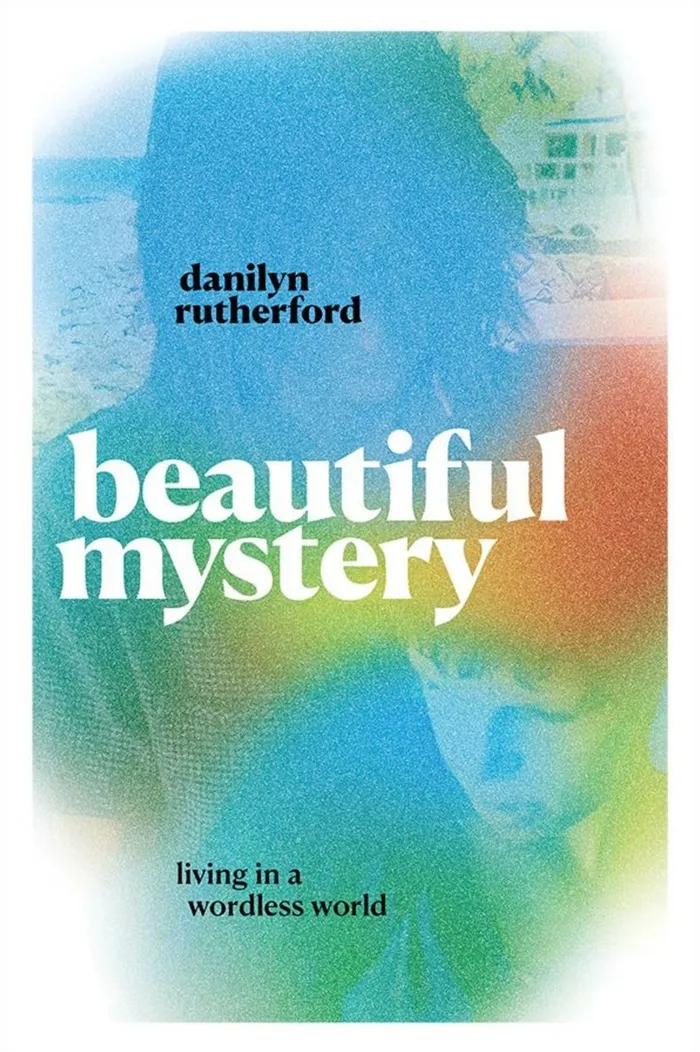
Beautiful Mystery
Living in a Wordless World
When Danilyn Rutherford and her husband Craig noticed that their six-month-old daughter Millie wasn’t making eye contact, they took her to their pediatrician. And an optometrist. Then a neurologist. Later, to a team of physical and occupational therapists. None of the doctors could give Millie a diagnosis, but it was clear that her brain was not developing at the rate it should. At an age when some children take their first steps, Millie had the cognitive ability and motor skills of a three-month-old. Three years later, Craig died suddenly of a heart attack and Danilyn found herself on the precipice of her anthropology career as a widow and single mother, still trying to solve the puzzle posed by Millie’s inaccessible mind.
Now in her twenties, Millie has never been able to express herself verbally, but she has a thriving social environment rooted in the people around her and in things her companions and family can see, hear, smell, and feel. Life in Millie’s world is far richer than might be immediately evident to those who think and communicate in conventional ways.
Beautiful Mystery explores what it means to be a person in the spaces between what we can and cannot say, and how we can fight to care for those we love when they don’t have the language to fight for themselves. Through her unique lens as a mother and an anthropologist, Rutherford tells the story of arriving in Millie’s world, what she found there, and how Millie showed her that words aren’t always what makes us human. Enlightening and deeply felt, Beautiful Mystery proves that you don’t have to understand someone to love them—a lesson that, if we all learned it, might allow us to live together in a fractured world.
Living in the Stone Age
Reflections on the Orgins of a Colonial Fantasy
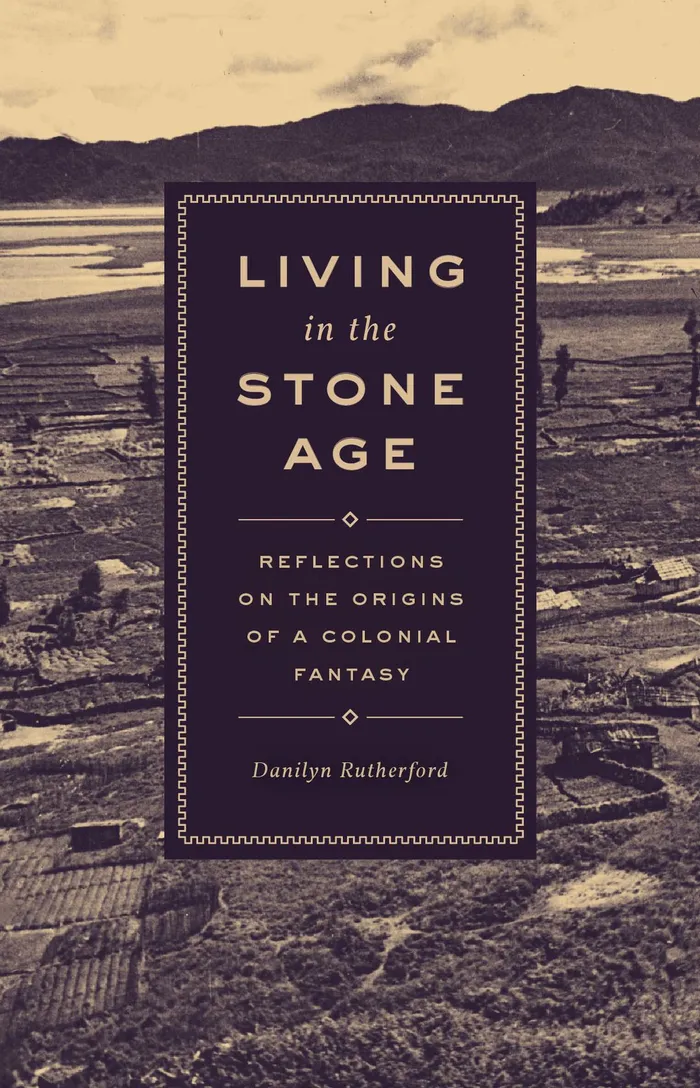
Living in the Stone Age
Reflections on the Orgins of a Colonial Fantasy
In 1961, John F. Kennedy referred to the Papuans as “living, as it were, in the Stone Age.” For the most part, politicians and scholars have since learned not to call people “primitive,” but when it comes to the Papuans, the Stone-Age stain persists and for decades has been used to justify denying their basic rights. Why has this fantasy held such a tight grip on the imagination of journalists, policy-makers, and the public at large?
Living in the Stone Age answers this question by following the adventures of officials sent to the New Guinea highlands in the 1930s to establish a foothold for Dutch colonialism. These officials became deeply dependent on the good graces of their would-be Papuan subjects, who were their hosts, guides, and, in some cases, friends.
Danilyn Rutherford shows how, to preserve their sense of racial superiority, these officials imagined that they were traveling in the Stone Age—a parallel reality where their own impotence was a reasonable response to otherworldly conditions rather than a sign of ignorance or weakness. Thus, Rutherford shows, was born a colonialist ideology.
Living in the Stone Age is a call to write the history of colonialism differently, as a tale of weakness not strength. It will change the way readers think about cultural contact, colonial fantasies of domination, and the role of anthropology in the postcolonial world.
Laughing at Leviathan
Sovereignty and Audience in West Papua
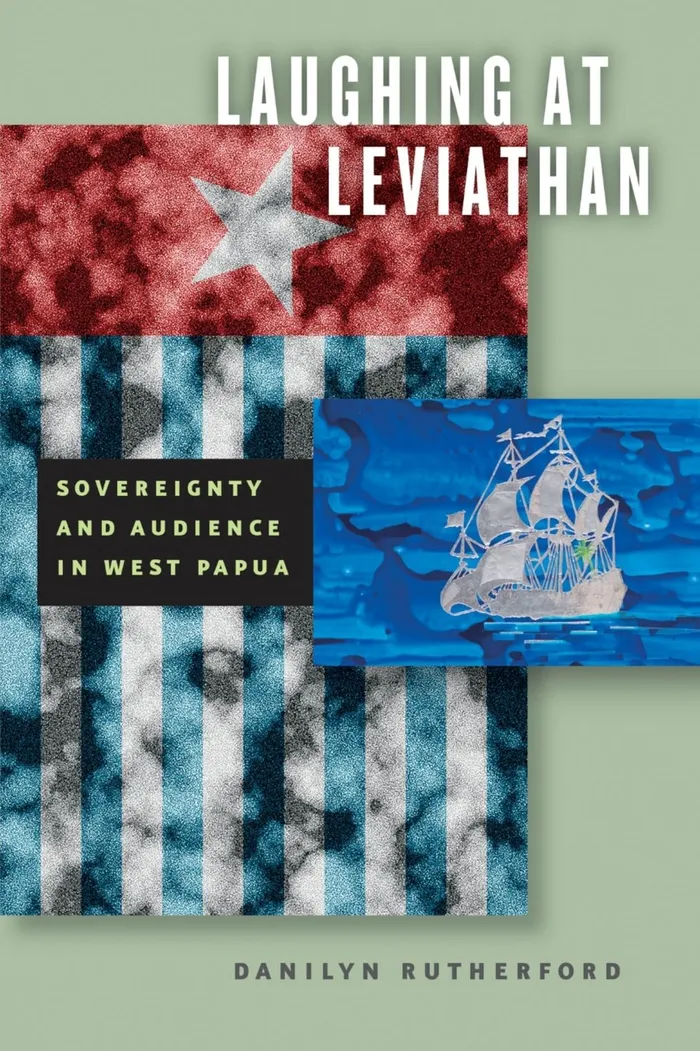
Laughing at Leviathan
Sovereignty and Audience in West Papua
For West Papua and its people, the promise of sovereignty has never been realized, despite a long and fraught struggle for independence from Indonesia.
In Laughing at Leviathan, Danilyn Rutherford examines this struggle through a series of interlocking essays that drive at the core meaning of sovereignty itself—how it is fueled, formed, and even thwarted by pivotal but often overlooked players: those that make up an audience.
Whether these players are citizens, missionaries, competing governmental powers, nongovernmental organizations, or the international community at large, Rutherford shows how a complex interplay of various observers is key to the establishment and understanding of the sovereign nation-state.
Drawing on a wide array of sources, from YouTube videos to Dutch propaganda to her own fieldwork observations, Rutherford draws the history of Indonesia, empire, and postcolonial nation-building into a powerful examination of performance and power.
Ultimately she revises Thomas Hobbes, painting a picture of the Leviathan not as a coherent body but a fragmented one distributed across a wide range of both real and imagined spectators. In doing so, she offers an important new approach to the understanding of political struggle.
Raiding the Land of the Foreigners
The Limits of the Nation on an Indonesian Frontier
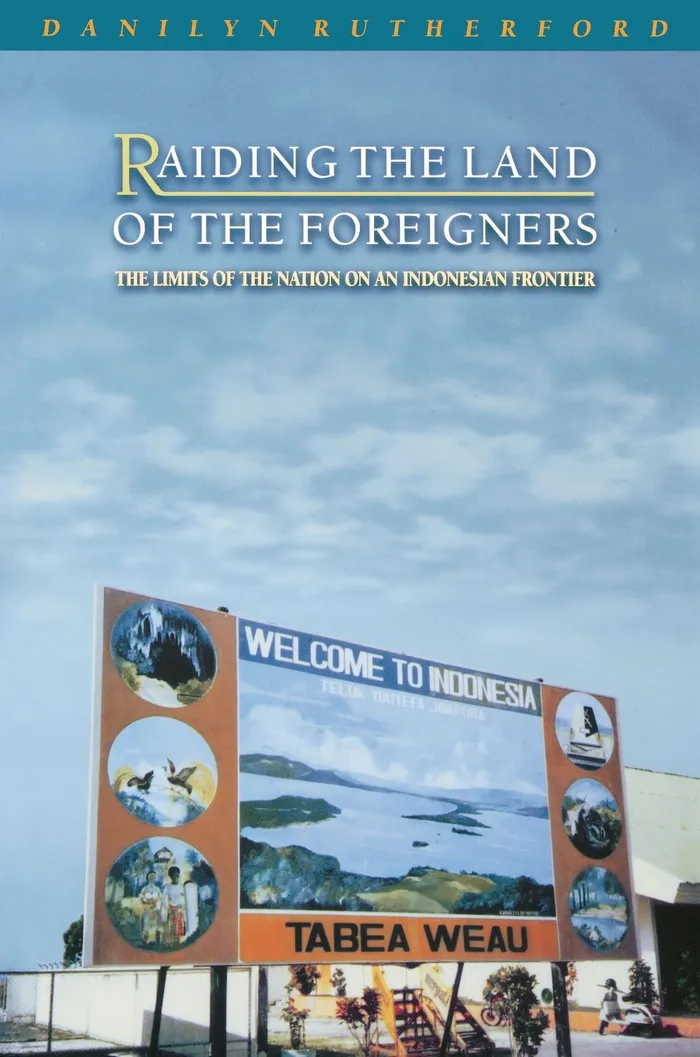
Raiding the Land of the Foreigners
The Limits of the Nation on an Indonesian Frontier
What are the limits of national belonging? Focusing on Biak—a set of islands off the coast of western New Guinea, on the eastern edge of Indonesia—Danilyn Rutherford’s analysis calls for a rethinking of the nature of national identity.
Approaching the foreign as a focus of longing in cultural arenas ranging from kinship to Christianity, Biaks participated in Indonesian national institutions without accepting the identities they promoted. Their remarkable response to the Indonesian government (and earlier polities laying claim to western New Guinea) suggests the limits of national identity and modernity, writ large.
With the resurgence of separatism in the province, Irian Jaya has become the focus of fears that the Indonesian nation is falling apart. Yet in the early 1990s, the fieldwork for this book was made possible by the government’s belief that Biaks were finally beginning to see themselves as Indonesians. Taking in the dynamics of Biak social life and the islands’ long history of millennial unrest, Rutherford shows how practices that indicated Biaks’ submission to national authority actually reproduced antinational understandings of space, time, and self.
This is one of the few books reporting on what was then the volatile province of Irian Jaya. It offers a new way of thinking about the nation and its limits—one that moves beyond the conventions of both scholarship and recent journalism. It shows how people can “belong” to a nation yet maintain commitments that fall both short of and beyond the nation state.